

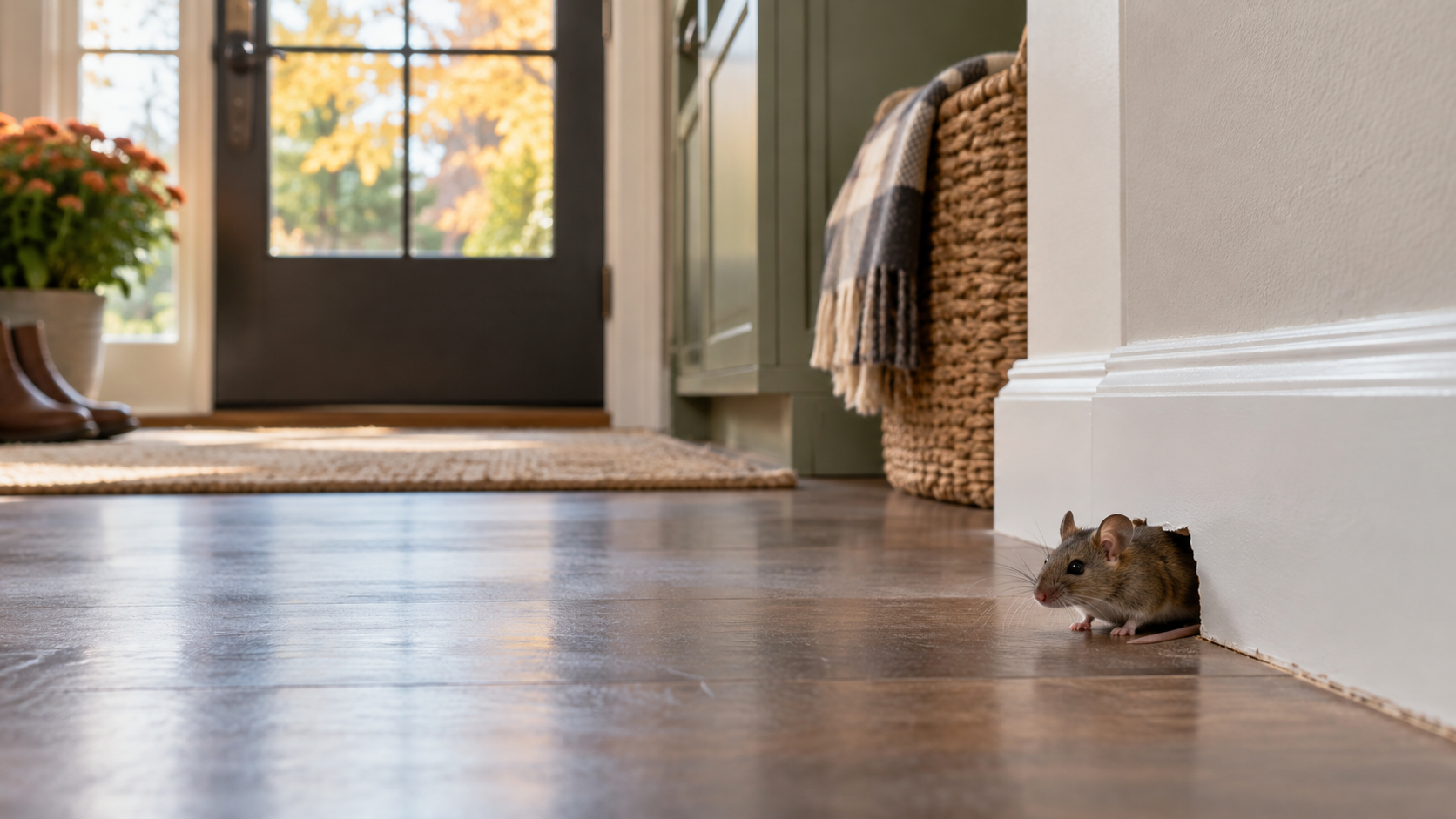
Think You Have Mice? Look for These Warning Signs
You may never actually see a mouse in your home.
Mice are naturally cautious, tend to be most active when a home is quiet, and can hide in areas that homeowners rarely inspect. That means the first indication of a mouse problem is often not the mouse itself—it's the evidence it leaves behind.
For Ottawa homeowners, rodent activity can become particularly noticeable as temperatures begin to fall and rodents seek food and shelter. Deer mice, for example, may enter buildings near fields and wooded areas in the fall.
Whether you live in central Ottawa, Orleans, Barrhaven, Kanata, Stittsville, Nepean, or one of the rural communities surrounding the city, knowing the early warning signs can help you respond before a small problem becomes more difficult to manage.
Here are 10 signs that mice may have moved into your Ottawa home.
1. Mouse Droppings
Droppings are one of the most recognizable signs of mouse activity.
You may discover them inside cupboards, beneath sinks, along walls, behind appliances, in storage areas, or close to food.
Don't limit your inspection to the kitchen. Basements, garages, utility rooms and attics can also provide rodents with quiet areas where activity may go unnoticed.
Health Canada identifies droppings as one of the common indications of a mouse or rat infestation.
Be careful when cleaning rodent droppings
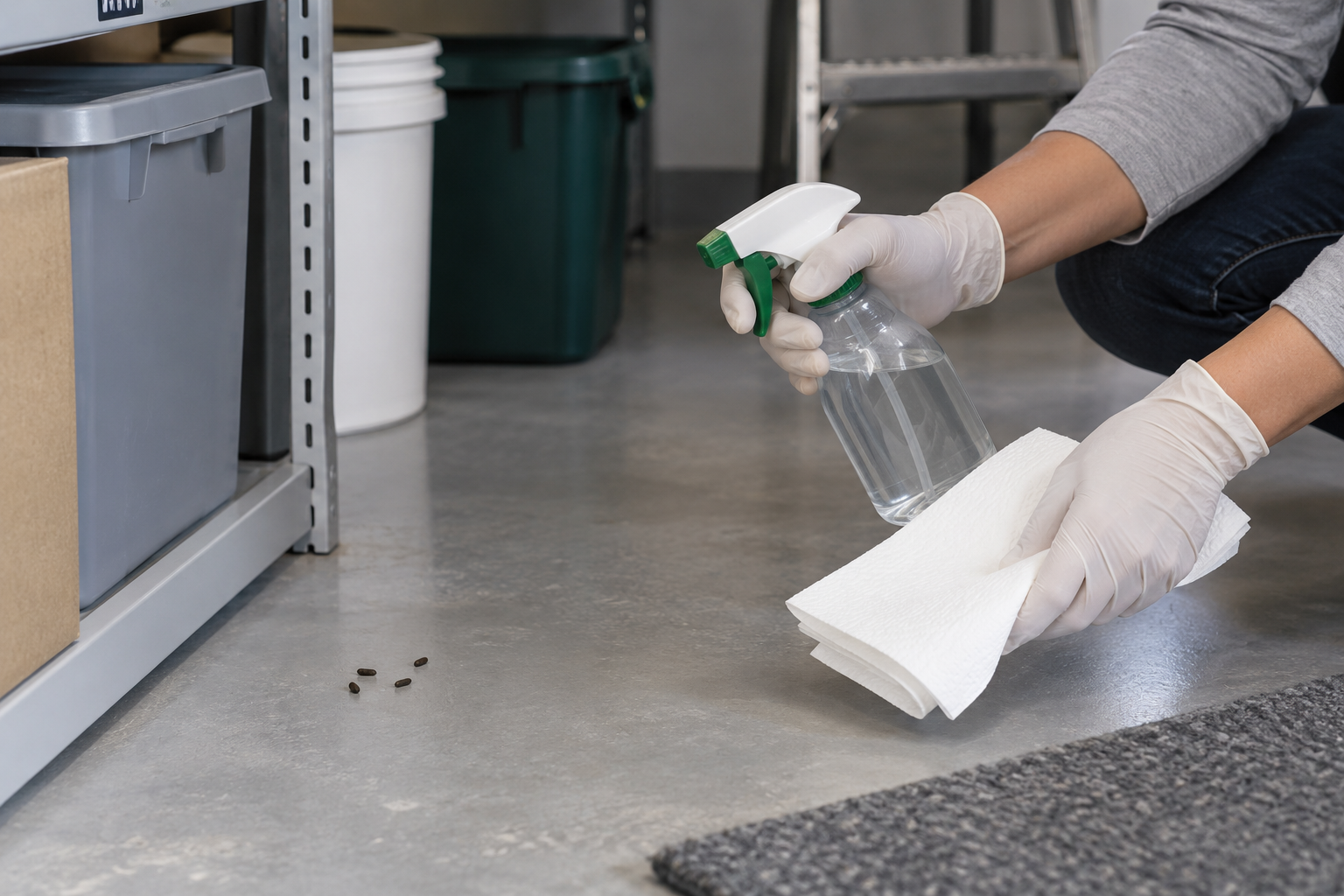
Don't immediately reach for the broom or vacuum cleaner.
Health Canada advises against sweeping or vacuuming dry rodent droppings, because disturbing contaminated material can create airborne dust. Rodent-contaminated areas should be cleaned using appropriate precautions.
If you discover a significant amount of droppings, particularly in an enclosed area, investigate the source before simply cleaning them away.
2. Scratching or Scampering Sounds at Night
Does it sound like something is moving inside your walls or ceiling?
Pay attention when your house becomes quiet.
Mice can make scratching, rustling and scampering noises while moving through wall cavities, ceilings and other concealed spaces. Health Canada specifically identifies scratching and scampering sounds in walls at night as a possible indication of a rodent problem.
If you repeatedly hear activity from the same area, there may be an established travel route or nesting location nearby.
3. Chewed Food Packages
Finding a hole in a cereal box, bag of pet food or package stored in your pantry should get your attention.
Rodents are opportunistic feeders and will take advantage of accessible food sources.
Inspect:
- cereal and grain packages
- bread and baked goods
- pet food
- bird seed
- bulk food
- garbage and compost areas
- food stored in garages or basements
Health Canada recommends storing dry food and pet food in rodent-resistant containers and keeping kitchens clean to make homes less attractive to mice and rats.
Food isn't the only thing mice chew, however.
4. Gnaw Marks
Rodents can leave chewing or gnawing damage on materials around the home.
Look around baseboards, storage boxes, cupboards, doors and other areas where you've noticed activity.
Gnaw marks can be particularly useful because they may help you identify a travel route between a hiding place and a food source.
Ottawa Public Health also recommends looking for chewed or damaged items when inspecting a property for signs of rodent activity.
Don't just look at the damage. Ask a more important question:
How did the rodent get there?
Finding the entry point is an important part of long-term rodent management.
5. Holes and Gaps Around Your Home
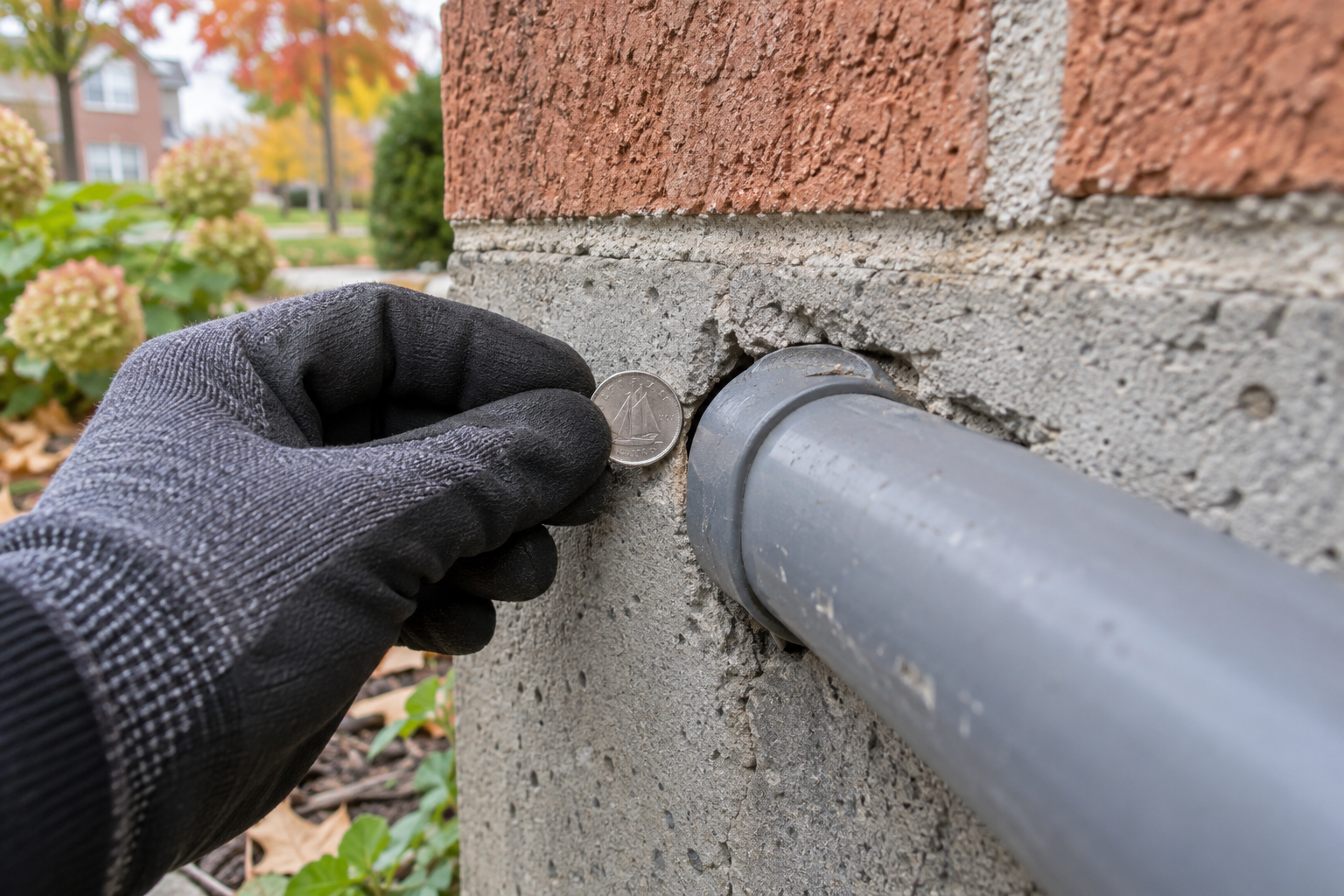
Sometimes the best evidence isn't inside your house at all.
Walk around the exterior and carefully inspect the foundation and exterior walls.
Look around:
- utility penetrations
- pipes
- doors
- windows
- dryer vents
- attic and fresh-air vents
- garage doors
- foundation cracks
- areas where different building materials meet
Mice don't need a doorway.
Health Canada notes that mice can squeeze through cracks approximately the size of a dime. It recommends repairing foundation cracks, weather-stripping doors and windows, and protecting vents and soffits with appropriate fine metal screening.
That makes surprisingly small openings worth investigating.
6. Nesting Material in Hidden Areas
A quiet, protected space inside your home can provide an attractive nesting location.
Check areas that aren't regularly disturbed, particularly where you've already found droppings, gnaw marks or other evidence.
Basements, storage areas, garages and other low-traffic spaces deserve attention.
Clutter can make the problem worse because it provides additional places for rodents to hide and nest. Both Ottawa Public Health and Health Canada recommend reducing clutter as part of rodent prevention.
An organized storage room isn't just easier to use—it is also easier to inspect for pest activity.
7. Evidence Behind Appliances
The visible part of your kitchen may look spotless while the area behind your refrigerator tells a completely different story.
Large appliances can provide concealed spaces close to food and water.
Periodically inspect behind and underneath appliances where practical, particularly if you've noticed droppings elsewhere in the kitchen.
Also check for food debris and leaking water sources.
Rodent prevention isn't only about eliminating food. Ottawa Public Health recommends eliminating accessible water sources as well.
8. Signs of Activity in the Garage
The garage is easy to overlook.
It can contain several things rodents find useful: stored food, bird seed, grass seed, garbage, recycling, cardboard and sheltered areas with relatively little human activity.
The garage may also provide potential entry points around the main door, side doors and utility penetrations.
Health Canada recommends removing clutter, storing food securely and using appropriate weather stripping as part of rodent prevention.
If you're inspecting your Ottawa home for mice, don't stop at the door connecting your garage to the house.
Inspect the entire garage.
9. Your Pet Suddenly Becomes Very Interested in One Area
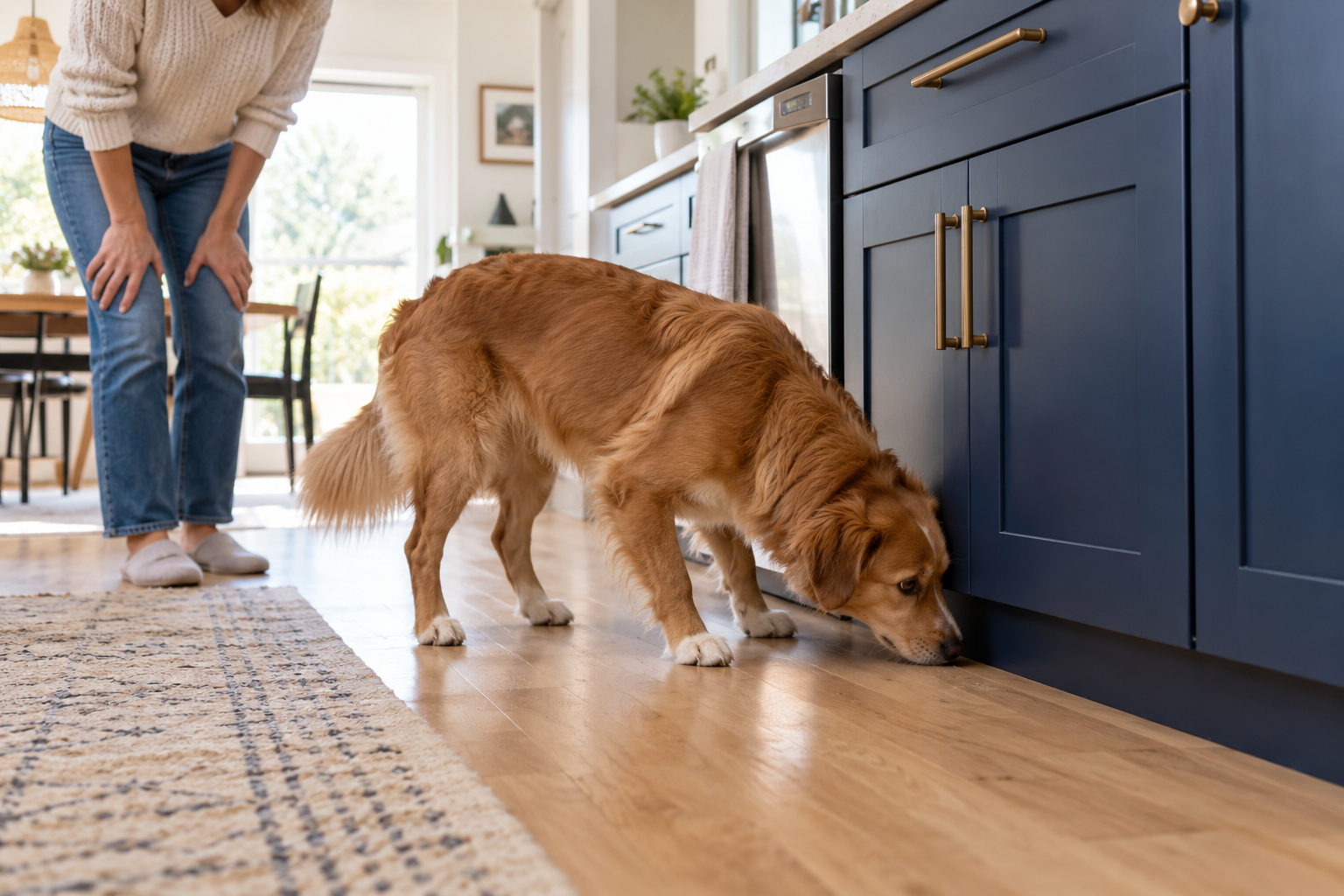
Sometimes your dog or cat notices activity before you do.
Repeated sniffing, staring or pawing at one section of a wall, cupboard or appliance doesn't prove you have mice. But when it happens along with scratching sounds, droppings or gnawing, it can give you another reason to inspect the area.
Look for physical evidence rather than relying on your pet's behaviour alone.
And remember that pest-control products require careful handling around pets and children. Health Canada advises following pesticide labels closely and notes that poisoned baits must be used in tamper-proof bait stations where children or pets could gain access.
10. You Actually See a Mouse
Finally, there is the most obvious sign.
You see one.
It's tempting to assume that a single mouse is an isolated visitor. The better response is to investigate.
Health Canada recommends addressing occasional rodent invaders promptly because mice and rats reproduce quickly and a small problem can develop into a larger infestation.
Finding one mouse should therefore trigger a broader inspection for entry points, droppings, food sources and other evidence of activity.
Why Mice Get Into Ottawa Homes
For a mouse, your house can provide three valuable resources:
food, water and shelter.
Ottawa's changing seasons add another factor. As outdoor conditions change in fall and winter approaches, protected indoor environments become attractive to rodents.
Properties close to fields, wooded areas and natural spaces can encounter additional pressure from certain mouse species. Health Canada specifically notes that deer mice may invade buildings near fields and woodlands during the fall.
However, rodent problems aren't limited to rural properties.
Urban and suburban homes can also provide food, water, hiding places and entry points.
That's why prevention should focus on the property itself rather than assuming your neighbourhood protects you.
What Should You Do If You Find Signs of Mice?
Think beyond simply catching the mouse you saw.
Effective rodent management requires looking at why the mice are there and how they are getting in.
Start by inspecting the exterior of your home. Seal appropriate gaps and repair cracks. Secure food and garbage. Remove unnecessary clutter. Keep vegetation and tall grass away from the foundation and eliminate easily accessible water sources.
These measures align with guidance from both Health Canada and Ottawa Public Health.
Then consider the level of activity you're seeing.
A trap may address an individual mouse. It doesn't necessarily address an entry point or continued rodent pressure outside your home.
That's where a broader rodent-control strategy can help.
Frequently Asked Questions About Mice in Ottawa Homes
What are the most common signs of mice in a house?
Common signs include droppings, scratching or scampering noises, gnaw marks, damaged food packaging and evidence of activity in hidden areas. Health Canada also lists urine, burrows or holes and tracks on dusty surfaces among signs of rodent activity.
Does seeing one mouse mean I have an infestation?
Not necessarily. One sighting alone doesn't tell you how many mice are present. However, it is a good reason to inspect the property for droppings, gnawing, entry points and other evidence rather than assuming the mouse was alone.
How small of a hole can a mouse get through?
Health Canada says mice can squeeze through cracks approximately the size of a dime. Small gaps around pipes, vents, doors and foundations therefore deserve attention.
Why do mice come into Ottawa homes in the fall?
Shelter and access to food become particularly valuable as outdoor conditions change. Health Canada notes that deer mice may invade buildings near fields and woodlands in the fall.
Should I vacuum mouse droppings?
No. Health Canada advises against sweeping or vacuuming dry rodent droppings because doing so can raise contaminated dust. Follow appropriate wet-cleaning and disinfection procedures instead.
Can I prevent mice from entering my home?
You can reduce the risk significantly by sealing potential entry points, securing food and garbage, eliminating accessible water, reducing clutter and keeping vegetation away from the foundation.
Stop Rodents Before They Get Inside
Finding the signs early is important. Preventing rodents from becoming established is even better.
Mosquito.Buzz Ottawa's Rodent Protection Program takes a proactive approach to protecting your home's perimeter. Our program includes four visits for just $375, helping provide continued protection through the seasons.
Don't wait until scratching in the walls tells you there's a problem.
Stop Rodents Before They Get Inside — Get 4 Visits for Just $375
Mosquito.Buzz Ottawa
613-231-2899
mosquito.buzz/ottawa
#signsofmice #micecontrol #rodentcontrolottawa #rodentprotection #mosquitobuzzottawa #ottawahomes
