

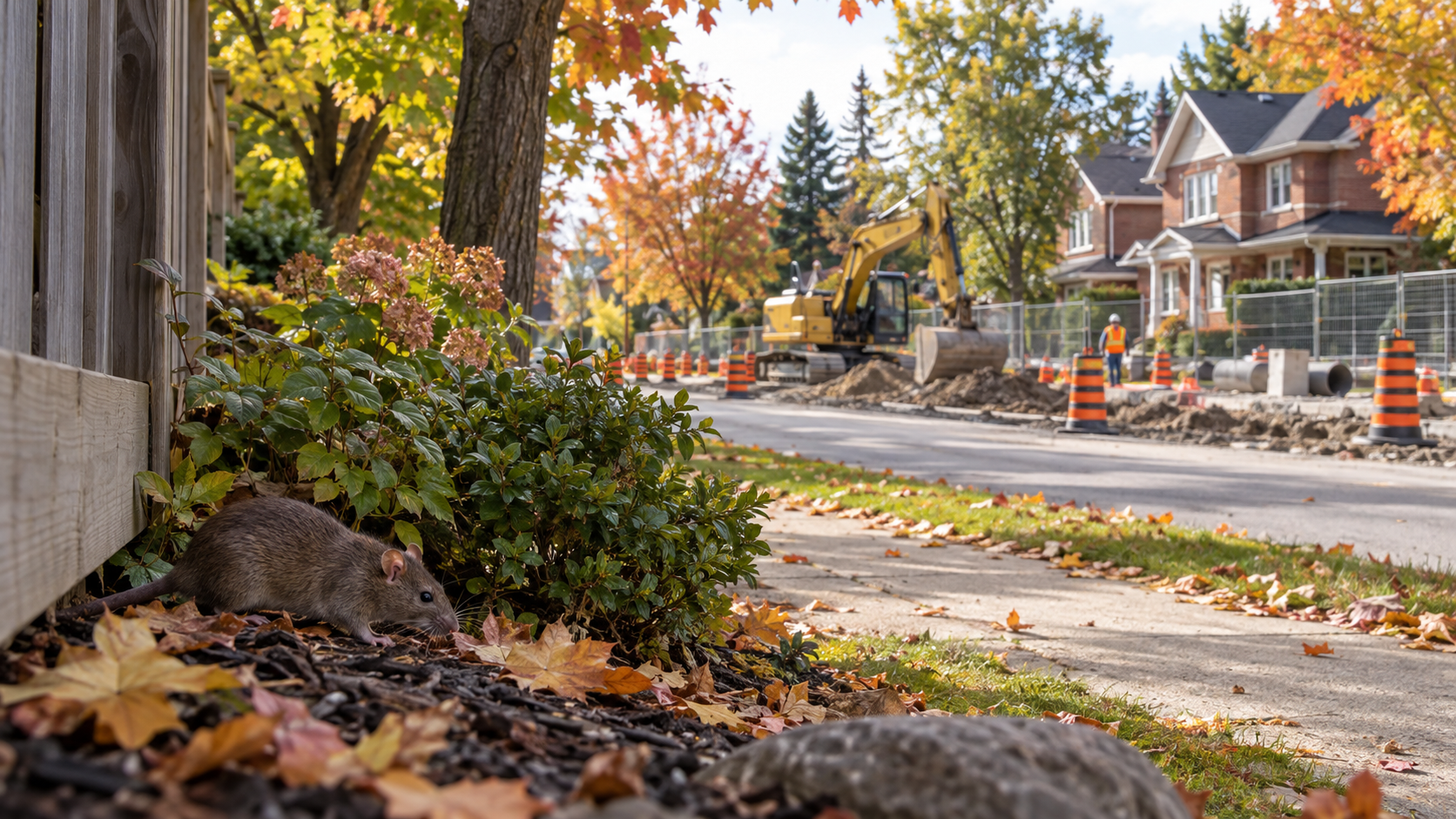
 Your Neighbourhood Has Never Had a Rodent Problem. So Why Now?
A homeowner can live in the same Ottawa neighbourhood for years without noticing mice or rats.
Then construction begins.
A road is excavated. An old building comes down. Sewer infrastructure is replaced. A vacant property becomes a subdivision. Heavy equipment starts moving earth.
Soon afterward, someone spots a rat in the backyard or hears scratching near the garage.
Is the construction responsible?
It can be a contributing factor—but the relationship needs to be understood carefully.
Construction doesn't create rodents. It can, however, disturb established shelter, food sources, and travel routes, forcing rodents already living nearby to adapt.
Ottawa itself recognizes the potential connection. The City's Rat Mitigation Working Group specifically identifies construction-related rat baiting as a measure that may be used on City projects, and City construction guidance directs residents with rat concerns during construction to report them through 311.
Ottawa Is in the Middle of Significant Construction
This isn't theoretical for Ottawa homeowners.
Stage 2 LRT work remains underway, including major activity associated with the western extension. The City reported in March 2026 that construction on the West Extension would continue into late 2026.
At the same time, Ottawa is undertaking numerous:
- sewer replacements
- watermain projects
- road reconstructions
- transit projects
- housing developments
- subdivision expansions
The City is also actively accelerating housing construction and infrastructure required for continued growth.
That means substantial amounts of soil, underground infrastructure, and previously undisturbed land are being altered throughout the city.
What Happens When Rodent Habitat Is Disturbed?
Rats and mice survive by establishing reliable patterns.
They identify places where they can find:
food + water + shelter.
They may use burrows, vegetation, structures, and underground infrastructure as part of their environment.
When excavation removes a burrow or blocks an established route, the animal doesn't simply disappear.
It looks for another option.
That could mean:
- neighbouring yards
- sheds
- garages
- foundation areas
- construction debris
- sewers
- nearby buildings
This is why rodent sightings sometimes appear to shift geographically during periods of disruption.
Sewer Construction Deserves Particular Attention
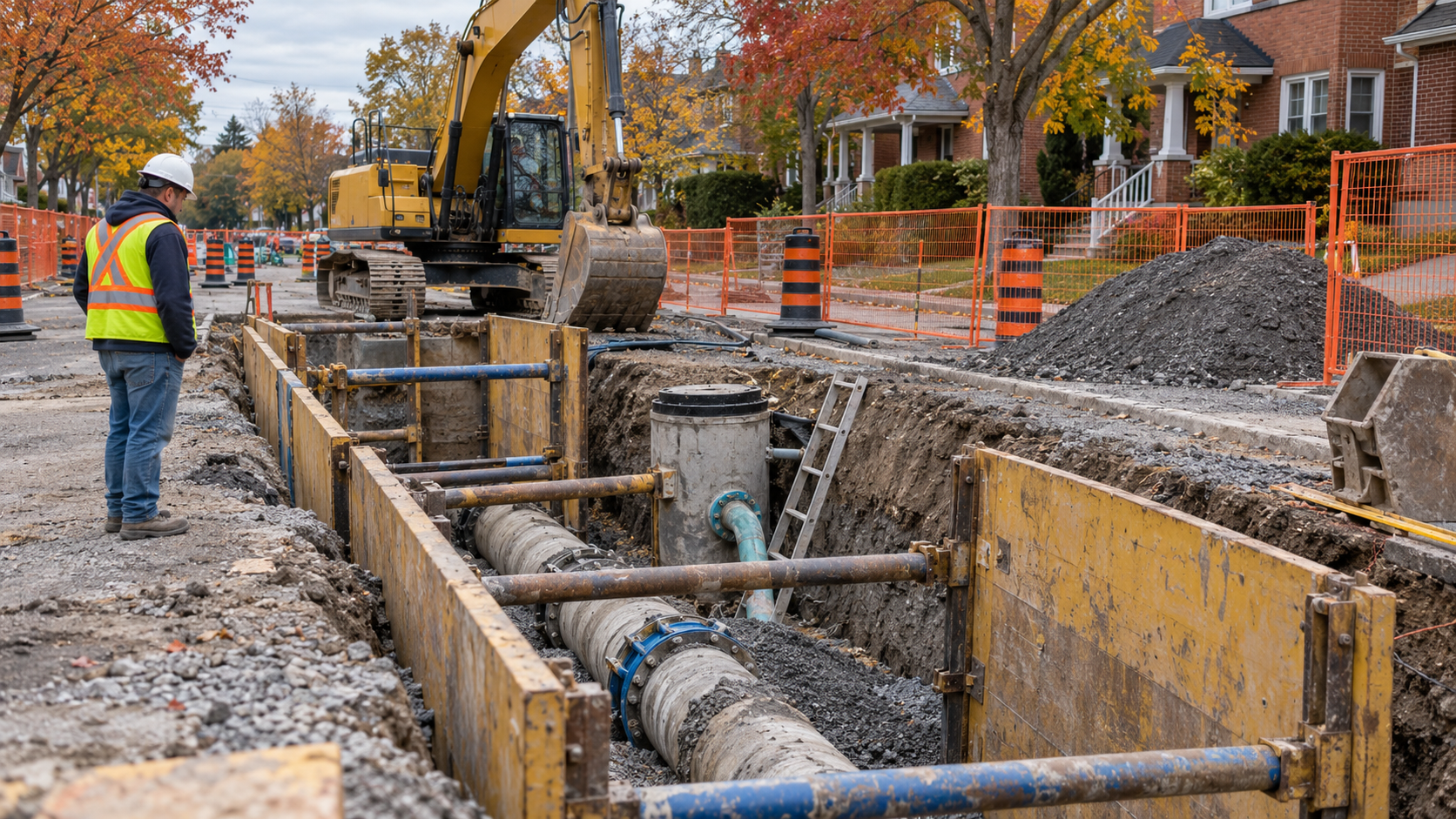
Many Ottawa road reconstruction projects aren't simply replacing asphalt.
They're replacing infrastructure beneath the road.
For example, several current City projects involve replacement or rehabilitation of sanitary sewers, storm sewers and watermains.
Ottawa also conducts sewer baiting when rat activity is detected in the wastewater system.
That doesn't mean every sewer contains rats, nor does it mean sewer construction automatically sends rodents into nearby houses.
It does demonstrate that Ottawa recognizes underground infrastructure as one component of urban rat management.
What About LRT Construction?
Ottawa's LRT expansion involves more than laying track.
Projects can include:
- tunnelling
- excavation
- road reconstruction
- utility relocation
- sewer work
- station construction
- site clearing
Large projects can change the physical environment around established pest populations.
There is not sufficient evidence to say that Ottawa's LRT construction has caused rodent problems at every nearby property—or that a rodent sighting near an LRT project was necessarily caused by the project.
But substantial ground disturbance is a sensible reason for homeowners nearby to become more observant about rodent activity.
Suburban Growth Creates a Different Type of Disturbance
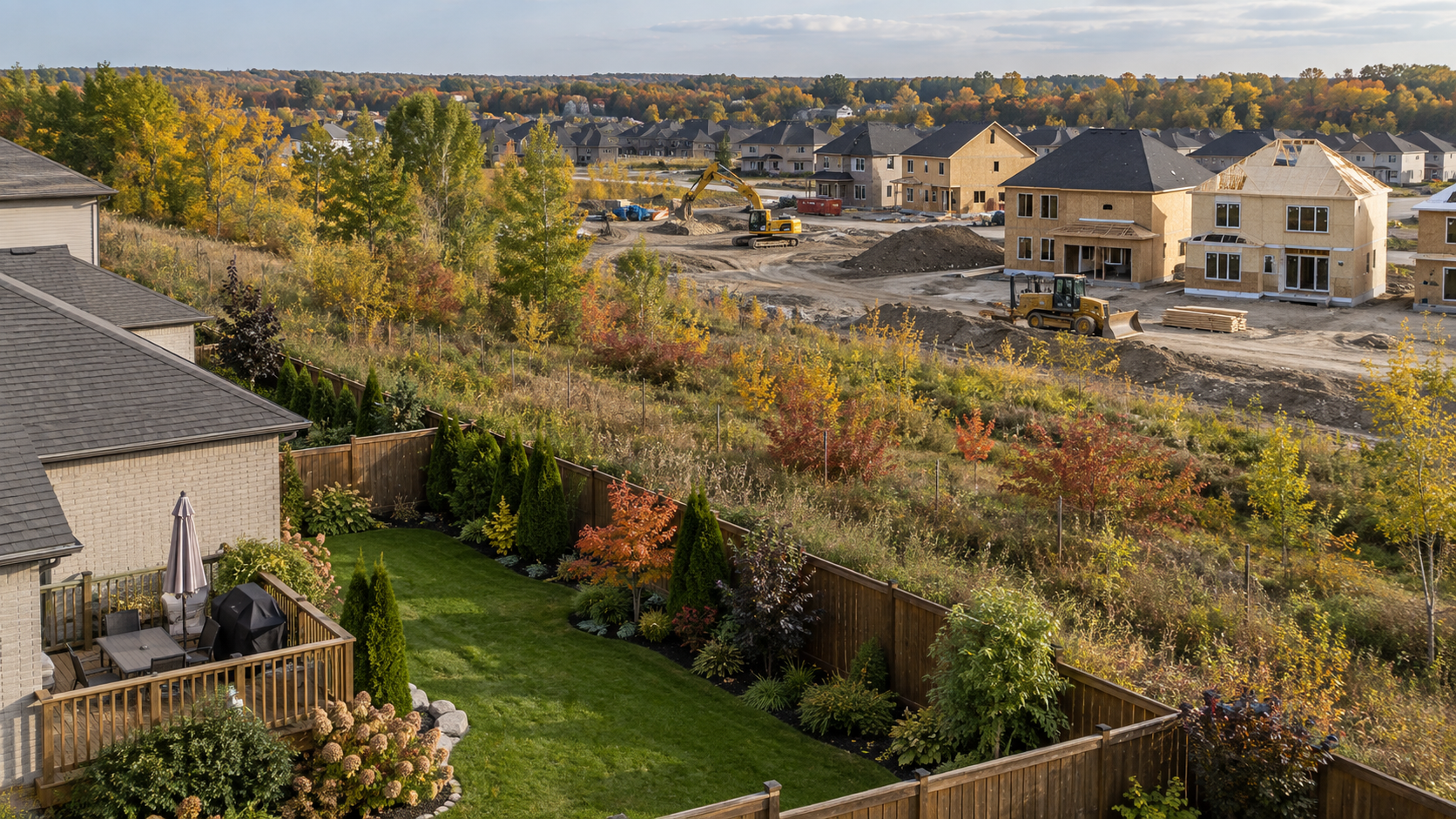
Now consider the outskirts of Ottawa.
New neighbourhood development can transform:
- open fields
- brush
- woodlots
- drainage areas
- vacant land
into active construction sites and eventually residential communities.
Ottawa continues to plan for significant housing growth, including infrastructure projects specifically intended to enable tens of thousands of new housing units.
Rodents that previously found shelter or food within undeveloped areas must respond as those environments change.
Again, that does not mean a new subdivision automatically has a rodent problem.
It means homeowners living immediately beside active development should recognize that the surrounding ecosystem is changing.
Why Previously Unaffected Homes Can Suddenly Become Attractive
A neighbouring disturbance may cause movement.
But whether a rodent actually enters your house depends on what it finds.
A mouse encountering your property may discover:
- a small foundation gap
- damaged garage weather stripping
- bird seed
- pet food
- accessible garbage
- dense vegetation
- a shed
- a quiet basement
Construction may move an animal.
Your property determines whether it finds an opportunity.
That's an important distinction.
What Should Ottawa Homeowners Near Construction Do?
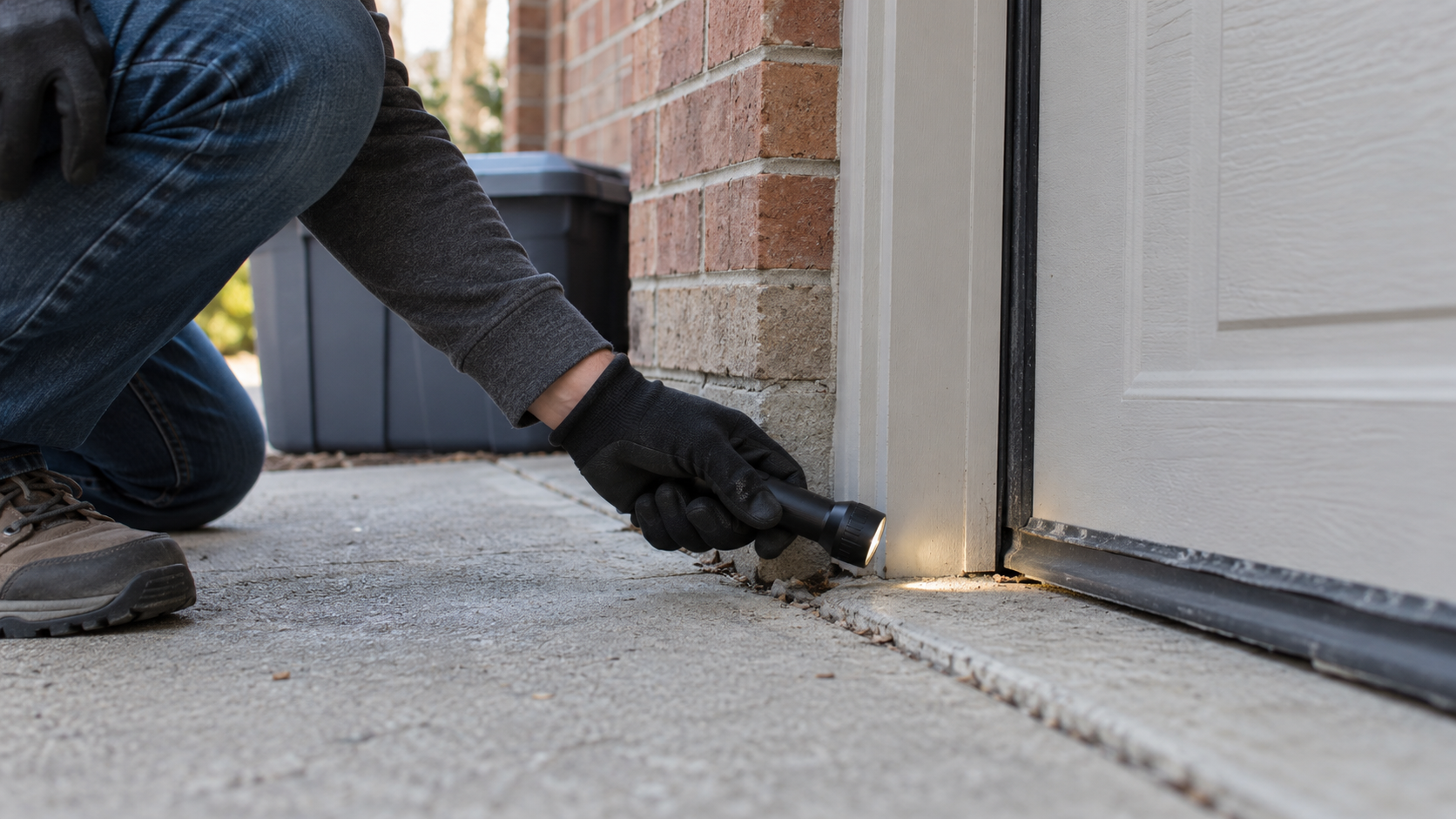
Inspect your exterior
Look closely around foundations, utilities, doors and vents.
Check the garage
Garages often contain both potential entry points and attractive food sources.
Secure garbage
Ottawa Public Health recommends hard plastic or metal containers with tightly fitting lids.
Remove accessible food
Store bird seed and pet food securely.
Reduce hiding places
Control weeds, dense vegetation and clutter around the house.
Watch for burrows
Ottawa Public Health notes that rat burrows may occur beneath bushes and vegetation and can have multiple openings.
Monitor for new activity
Look for droppings, gnawing, tracks and changes around the foundation.
Frequently Asked Questions
Does construction cause rats?
Construction doesn't create rats. It may disturb existing populations, shelter or travel routes and contribute to rodents moving elsewhere.
Can sewer work disturb rats?
Underground infrastructure can be part of urban rat habitat. Ottawa conducts sewer baiting when activity is detected and incorporates rat considerations into some construction projects.
Is Ottawa doing anything about rats during construction?
Yes. City guidance states that construction-related rat baiting may occur for City projects, and residents can report rat concerns through 311.
Does LRT construction cause rats in homes?
There isn't enough evidence to make that blanket claim. Major excavation can disturb rodent environments, however, so homeowners near extensive construction may want to increase inspection and prevention.
What should I do if construction starts near my home?
Inspect your property's exterior, eliminate food and water sources, reduce shelter and correct possible entry points before you notice indoor activity.
When the Neighbourhood Changes, Protect Your Property
You can't control where Ottawa builds a road, replaces a sewer or expands the LRT.
You can control how attractive and accessible your property is to displaced rodents.
If major construction is happening near your neighbourhood, proactive rodent protection can provide another layer of defence.
Stop Rodents Before They Get Inside — Get 4 Visits for $375
Mosquito.Buzz Ottawa | 613-231-2899
#ottawaconstruction #lrtottawa #rodentcontrolottawa #ratcontrolottawa #rodentprotection #mosquitobuzzottawa
